



Yili establishes a new company in Heilongjiang
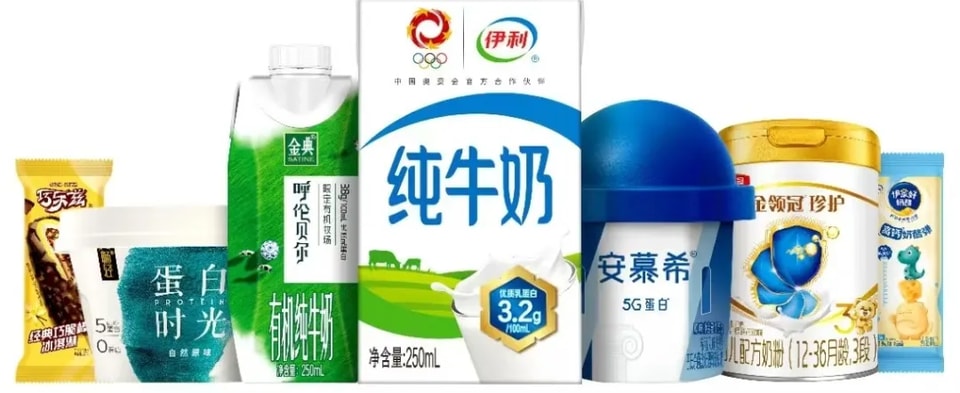
According to Qichacha APP, Heilongjiang Jinhan Yili Dairy Co., Ltd. was recently established with a registered capital of 20 million yuan.Its business scope includes: sales of mechanical parts and components; sales of mechanical equipment; and leasing of mechanical equipment.Equity penetration data from Qichacha shows that the company is wholly owned by Yili Industrial Group Co., Ltd. Notably, in January 2026, Yili founded Inner Mongolia Jinhan Yili Dairy Co., Ltd. in Inner Mongolia, with Duan Huibin serving as its legal representative. The company has a registered capital of 20 million yuan, and its business scope covers food sales, food additive production, food manufacturing, and other related businesses. In addition, in mid-December 2025, Yili set up five wholly-owned investment subsidiaries in Inner Mongolia, namely Yonghao Investment, Yuchao Investment, Taiwei Investment, Longzhuo Investment and Hongteng Investment, with a total subscribed capital contribution reaching 667 million yuan. At the earnings briefing held on April 30th, Pan Gang stated, "The toughest time for the industry is behind us." Yili Industrial Group delivered solid annual results with year-on-year growth in both revenue and net profit, and its core operating profit margin exceeded market expectations. The company honored its commitments by adhering to the principle of matching words with deeds. Yili noted that it has fully fulfilled the net profit margin target of 9%–10% promised to investors back in 2021. The year 2026 marks the starting point of Yili’s new five-year strategy. In the first quarter, the company hit record highs in both operating revenue and deducted non-recurring net profit attributable to parent company, achieving a strong start to the year. Pan Gang, Chairman and President of Yili Group, commented that 2025 marked the conclusion of the previous five-year strategic cycle. Driven by three major pillars — continuous optimization of product mix, refined cost control, and improved operational efficiency across the industrial chain — the company achieved breakthrough growth in profitability. The decline in raw milk costs provided strong support. Meanwhile, Yili optimized its expense structure and adopted digital tools to boost resource utilization efficiency, bringing down both the absolute amount and ratio of sales expenses. Coupled with a higher proportion of high-margin businesses such as milk powder and cold drinks, these factors jointly pushed the profit margin above expectations. When talking about the dairy cycle and raw milk price volatility that have plagued the industry for years, Pan Gang pointed out that upstream pastures have continued capacity reduction. The cattle inventory dropped by about 200,000 to 300,000 head in 2025, and the culling of replacement heifers accelerated further in Q1 2026, improving the industry’s supply-demand balance. "The hardest days for the dairy industry are over," Pan Gang remarked. "Current raw milk prices are already at a low level and stabilized quarter-on-quarter in Q1. Prices are expected to bottom out and rebound in the second half of the year as supply and demand improve. In the long run, the rapid expansion of B-end deep processing business will greatly boost raw milk consumption, further smoothing out the industry’s cyclical fluctuations." Yili is a dairy product production and processing enterprise founded in June 1993 and headquartered in Hohhot, Inner Mongolia Autonomous Region. It ranks among the top five dairy companies worldwide. Yili Group is mainly engaged in the production and sales of a full range of dairy products and healthy beverages, covering major product lines including liquid milk, dairy beverages, milk powder, yogurt, frozen drinks, cheese, milk fat, and packaged drinking water. Its products are primarily sold across the domestic market, with selected items exported overseas. In 2025, the company achieved a total operating revenue of 115.931 billion yuan and a net profit attributable to parent company of 11.565 billion yuan, representing a year-on-year increase of 36.82%. With a forward-looking and balanced business portfolio, Yili has reshaped the growth logic of the dairy industry. It stands out as the only comprehensive dairy enterprise to register double growth in both revenue and profit, further consolidating its unrivaled leading position as the absolute frontrunner of China’s dairy sector. Yili’s across-the-board leadership in all product categories did not come overnight. It is the fruit of long-term consumer-centric development and continuous in-depth efforts in quality, brand building, distribution channels, and innovation. Especially in liquid milk — its core business foundation — Chairman Pan Gang took the lead in the industry to vigorously advance the national layout of liquid milk, implement divisional system reform, and build a comprehensive quality system, laying a solid foundation for the company’s long-term industry leadership. From a single cup of milk to diversified product categories, and further to high-quality targeted nutritional supply, every breakthrough stems from the corporate mission of pursuing a healthier and better life. Whatever consumers need will always be the direction Yili strives toward.
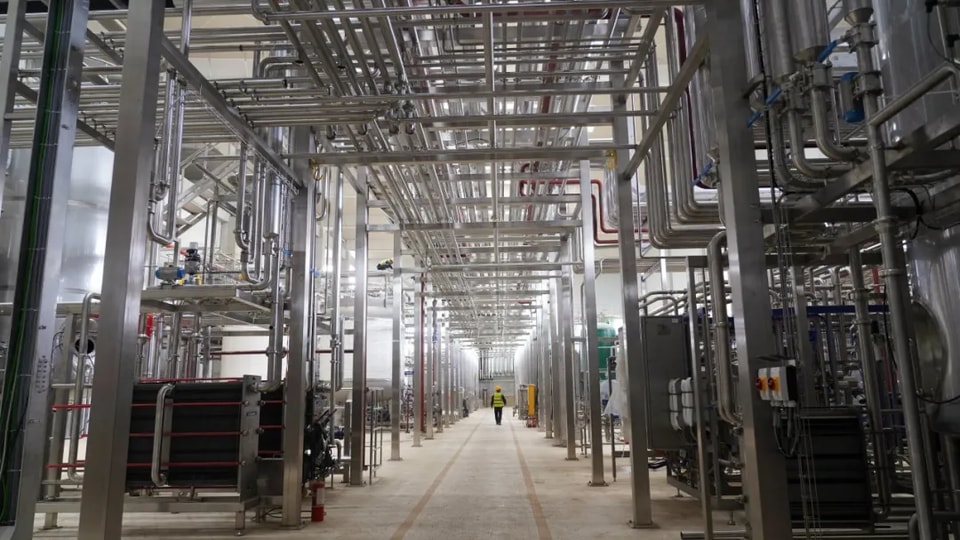
Annual 20,000-ton Liquid Goat Milk Project Scheduled for October Launch
Recently, reporters visited the construction site of Baiyue Goat Dairy Group’s 20,000-ton annual liquid goat milk project. It was learned that the main factory buildings have been fully completed. Inside the workshops, process pipelines are neatly arranged, large milk storage tanks stand in orderly rows, and all dairy production lines are undergoing intensive installation and commissioning.The construction site is bustling yet well-organized, and all preparatory work ahead of the project’s commissioning is progressing steadily. With a total investment of 142 million yuan and covering a land area of 49.303 mu, the project is a key initiative for the goat milk industry in Yanliang District, Xi’an City, Shaanxi Province. It is scheduled to be officially put into operation this October, helping the enterprise improve its whole industrial chain layout and lead the high-quality development of China’s liquid goat milk industry. Located in Wutun Subdistrict, Yanliang District, the project officially started construction in March 2025. To date, all civil engineering works have been fully completed. The construction focus has shifted entirely to the installation and commissioning of production lines, as well as the simultaneous fine decoration inside and outside the factory compound. All construction phases are seamlessly connected and being advanced efficiently. In accordance with the construction schedule, single equipment commissioning will start in mid-to-late June, and stability testing of all production lines will be fully completed in July. Full-process integrated commissioning will be carried out in August, and the project will officially commence production and operation in October. The project targets the diversified and high-end demand of the goat milk market, making a precise layout in the mid-to-high-end liquid goat milk track. It plans to build production lines for seven core product categories, covering a full range of goat dairy products including UHT shelf-stable goat milk, ESL pasteurized goat milk, low-temperature high-protein goat milk, ambient and low-temperature stirred goat yogurt, freeze-dried colostrum powder, and freeze-dried children’s snacks. The first phase is equipped with 5 standardized production lines, while reserving room for the expansion of production lines for cheese, formulated milk and other products, laying a solid foundation for subsequent product iteration, market expansion and production capacity upgrading.
Yuexiu Dairy: Does it rely not on established players, but on bold rapid expansion?
Last week, Beverage Marketing published an article about the milk brand Xie Tiandi, attracting numerous reader comments. As readers debated why Xie Tiandi had such a strong start followed by a steady decline, another dairy brand under the Yuexiu Group was also brought up for discussion. "Is this brand from the same company as that scallion and ginger flavored milk?" That comment soon drew a flood of follow-up replies. It seems that compared with Xie Tiandi, which positions itself as a high-end brand, consumers are far more interested in Fuxing, a brand often seen making bold, erratic market moves. Some netizens even commented bluntly: “The only dairy brand Yuexiu has done really well is Fuxing.” Such high praise? Let’s take a closer look at the whole story. 01 Shared Origin, Different Fates First, let’s briefly sort out the relationship between these brands. Yuexiu Group operates across multiple business sectors. It takes finance, real estate and transportation as its pillar industries, and food, healthcare and high-end manufacturing as emerging growth industries, forming a 3+3 industrial layout. Yuexiu Dairy is one of the core business platforms in the Group’s food sector. It owns four major brands: Huishan Dairy, Fuxing Dairy, Great Wall Dairy and Wuyang Ice Cream, forming a nationwide layout summarized as Fuxing in the south, Great Wall in central China, and Huishan in the north. Yuexiu Dairy’s development is marked by its deep financial resources and aggressive expansion strategy. It has built a national dairy landscape mainly through acquiring and integrating time-honored dairy enterprises. Huishan Dairy, originally a century-old brand based in Shenyang, was acquired and restructured by Yuexiu Group for 3 billion yuan in 2020, focusing on the Northeast market. Fuxing is a time-honored local brand in Guangzhou, an inherent dairy asset of Yuexiu Group, targeting the Guangdong-Hong Kong-Macao Greater Bay Area. Great Wall Dairy mainly covers the Beijing-Tianjin-Hebei region. As for the much-discussed brand Xie Tiandi, it is under Yuexiu Huishan Dairy. To some extent, it was tasked with achieving 10 billion yuan in annual sales by 2025. However, the brand’s recent price cuts not only signal the collapse of its high-end positioning, but also make the 10-billion-yuan sales target seem increasingly unattainable. The massive brand exposure it poured huge sums into has vanished like sand blown away by the wind, leaving no trace behind. In the comment section of that article, many netizens said they had barely heard of the brand. As one door closes, another opens. By contrast, Fuxing’s quirky, headline-grabbing moves have successfully etched its name into consumers’ minds. Admittedly, consumers mostly refer to it casually as that ginger-scallion milk, that poached chicken milk, or that soy sauce chicken milk. Still, you have to admit this unconventional strategy has struck a chord with the public. Back in January this year, a new product quietly hit the shelves: Ginger-Scallion Poached Chicken Flavored Milk. It sold out across all online channels within just five days after launch. Related topics quickly went viral across social media and were even cited as a consumption trend case in the Two Sessions coverage. Three months later, the second offering in the same lineup — Rose Soy Sauce Chicken Flavored Milk — was launched, repeating the phenomenal popularity of its predecessor. Market performance shows that this bold gamble has yielded far better-than-expected returns. According to disclosure from its parent company Fuxing Dairy, both products sold out in a short time. More importantly, 60% of buyers were young consumers aged 18 to 35, and among them, another 60% were first-time purchasers of Fuxing products. This means the quirky chicken-flavored milk has successfully helped the century-old Fuxing brand build a connection with Generation Z consumers. 02 What Do Consumers Really Want? On one side, high-end brand storytelling has lost its appeal; on the other, bizarre and novelty marketing has gone viral. Two vastly different strategies have led to completely opposite outcomes. At this point, it is hard not to feel a sense of regret. Brands spend heavily building a high-end image, yet fail to resonate with consumers. By contrast, embracing quirky, offbeat ideas easily wins public acceptance. Behind this phenomenon lies a market mismatch shaped by two different eras. Bai Ying, who led the branding of Xie Tiandi, once created Telunsu, a phenomenal blockbuster dairy product. Having reaped huge dividends from high-end brand storytelling, she attempted to copy the same formula for Xie Tiandi. Yet she overlooked one crucial fact: times have changed completely. Over the years, consumers have long become disenchanted with those pompous, high-end brand narratives. Phrases like “a gift from nature” are little more than a blatant excuse to justify premium pricing. Rather than such empty, grandiose marketing gimmicks, modern consumers increasingly favor brands that show a genuine, down-to-earth human touch. This is exactly why Fuxing’s quirky chicken-flavored milk became a hit. On the surface, it seems nothing more than a fleeting novelty that attracts curious buyers; fundamentally, it caters to young people’s demand for cultural identity and social currency. By combining dairy drinks with Cantonese signature dishes, the product captures public attention while retaining strong regional characteristics. Of course, if Fuxing rests on its laurels and goes no further, it will only capitalize on short-term traffic and fleeting popularity, eventually ending up the same as those one-hit-wonder novelty beverages. Fortunately, the brand has not been blinded by temporary popularity; instead, it has demonstrated a commitment to long-term development. For Fuxing, the quirky chicken-flavored milk series merely serves as a well-timed traffic entry point. As a century-old dairy enterprise, it cannot rely solely on novelty flavors for sustained growth. Accordingly, Fuxing Dairy has successively launched new products such as Five-finger Peach Milk and Ginger Poured Milk. Compared with the chicken-flavored milk line, these new offerings are far more conventional while still retaining strong local Cantonese characteristics. Five-finger peach is an essential ingredient for Cantonese soup boiling and boasts certain health-preserving benefits. Ginger poured milk, a classic Cantonese dessert, needs no introduction — it delivers a fresh taste experience and enjoys high consumer acceptance. Looking at its overall layout, Fuxing’s strategy is quite clear. As a regional dairy brand unable to compete with national giants in scale, it has chosen to break into segmented tracks and build differentiated competitive barriers rooted in local features. The pioneering chicken-flavored milk, health-oriented five-finger peach milk, and ginger poured milk inspired by classic Cantonese desserts together forge a one-of-a-kind Cantonese-flavored brand identity exclusive to Fuxing Dairy. For a time-honored dairy brand rooted in Guangdong for over 160 years, deeply exploring local Cantonese flavors is undoubtedly a more realistic path than engaging in cutthroat homogeneous competition with industry giants. You must have felt a strong sense of familiarity by now. This marketing strategy seems oddly familiar. Fuxing Dairy has clearly learned its tricks from Tianjin Haihe. As one of the earliest pioneers of novelty flavored milk in China, Tianjin Haihe shot to fame with its debut Jianbing Guozi flavored milk. By virtue of differentiated product positioning, it broke free from the competitive squeeze of Mengniu and Yili, building a nationwide brand image of being “playful and creative” in consumers’ minds. Fuxing has obviously grasped the core of this strategy. It integrated the food memories deeply embedded in Cantonese people’s DNA into dairy products, striking a precise emotional resonance with local consumers and arousing the willingness to try among consumers from other regions. These new young consumers are exactly the steady stream of new audiences that Fuxing has long been striving to attract. 03 Closing Remarks Essentially, this strategy seizes the transformation of contemporary consumption logic. In the past, consumers chose milk mainly for nutrition, brand reputation and brand stories. Nowadays, young consumers also pursue emotional value and social value. Fuxing’s wisdom lies in that it does not take novelty as its sole selling point. It uses bold, unconventional creative products to gain viral traffic, then retains the audience with locally featured products rooted in regional culture, turning traffic into genuine brand loyalists. It reaps the dividends of online popularity, while never abandoning its fundamental footing as a century-old dairy enterprise.
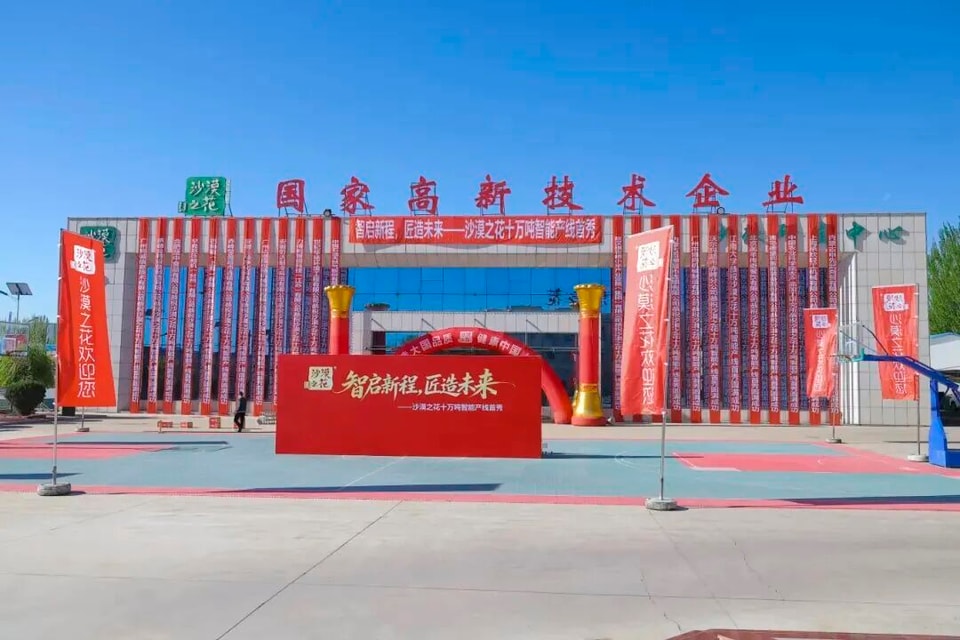
Investment of 240 Million Yuan: Desert Flower’s 100,000-Ton Intelligent Factory Goes into Operation
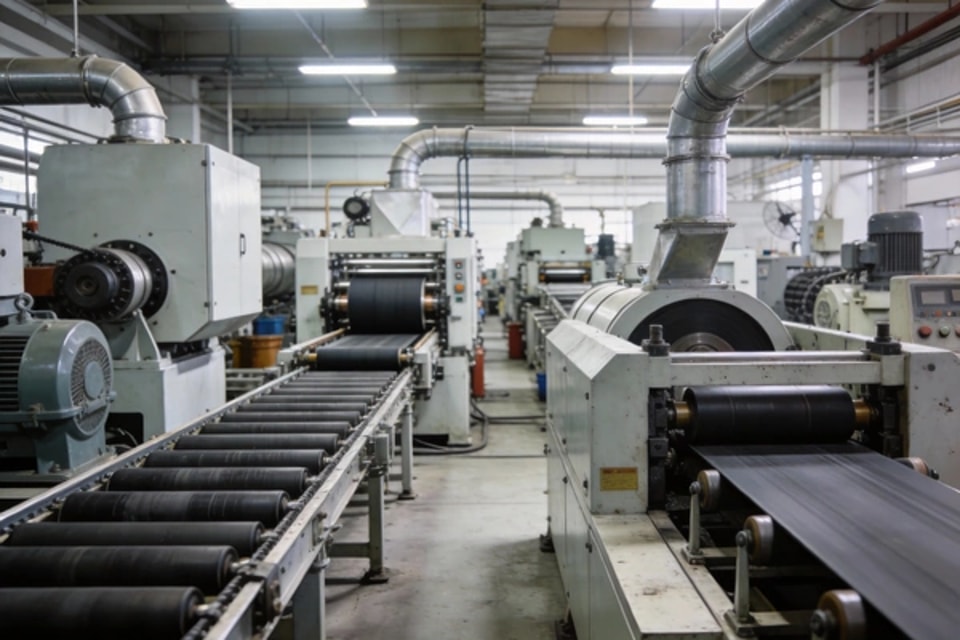
Recently, the 100,000-ton intelligent beverage production workshop and intelligent warehouse construction project of Inner Mongolia Desert Flower Ecological Industry Technology Co., Ltd. has officially been put into operation. With a total investment of 240 million yuan, the project covers an area of 113.55 mu and has a construction area of 30,000 square meters. Located in Aohan Banner Industrial Park, Chifeng City, Inner Mongolia Autonomous Region, the project broke ground and launched in July 2024. The project has introduced an aseptic cold filling production line, which locks in the original flavor and nutritional activity of seabuckthorn and almonds to the greatest extent.It operates dual production lines for aluminum cans and PET bottles simultaneously. PET packaging covers mainstream specifications such as 28mm and 38mm neck sizes, as well as the full volume range from 300ml to 1L, catering to multi-category and multi-scenario production needs. The aseptic production line boasts an hourly output of 24,000 bottles, and the aluminum can filling line reaches 36,000 cans per hour. Upon reaching full production capacity, the annual output will hit 100,000 tons.In addition, a 24-meter-tall intelligent automated warehouse and a 100,000-grade purified raw material warehouse have been constructed to improve warehouse turnover efficiency. According to reports, the project has installed 20 intelligent debittering tanks, with a single-batch processing capacity of 40 tons of almonds. Equipped with supporting color sorters for precise impurity removal, it adopts pre-boiling and peeling processes to ensure stable quality control. Moreover, high-precision imported grinding equipment is deployed to achieve full utilization of almonds, extract protein and dietary fiber, reduce raw material waste, and improve taste and nutritional value.Meanwhile, the under-construction juicing workshop will realize immediate juicing of fresh seabuckthorn berries and complete utilization of fruit peels, maximally preserving nutrients including seabuckthorn flavonoids and seabuckthorn peptides. This project serves as a strategic initiative for Desert Flower to expand its presence in the high-end healthy beverage market. After being put into operation, it will form a dual-workshop parallel production model with the existing workshop. The old workshop ensures the stable supply of conventional products, while the new workshop focuses on new product R&D and mass production, high-end beverage manufacturing and OEM processing services. It is capable of producing a wide range of product categories, including classic almond drinks, seabuckthorn beverages, plant-based protein drinks, and carbonated beverages.

About Anxinde